House clearance in Marlow

House Clearance Marlow provides a straightforward house clearance service for homes in Marlow and the surrounding area, with work planned around what needs removing, what should stay and how access is managed on the day. The service is suited to full-property clearances, partial room clearances and the removal of bulky household items that are awkward to shift alone. If you need a clean, practical approach to clearing a property, our team can help you organise the job without unnecessary complication.
The work can cover furniture, white goods, general household contents, loft items, garage contents and other mixed loads that have built up over time. We can also separate reusable items from material that needs disposal, so the process stays orderly from the first visit to the final load. Clear communication about scope matters because it helps set the right plan for the property, whether you are clearing a single room or a whole house. If you are preparing a move, dealing with a bereavement or just reclaiming space, this service is designed to make the practical side easier.
For an initial conversation, it helps to share the type of property, the rooms involved and any access issues that may affect lifting or loading. If possible, make a short note of the larger items you want removed and anything that must remain in place. A simple list is usually enough to start shaping the job, and it supports a more accurate quotation request. You can begin with the rooms that matter most and add the rest once the basics are clear.
Clearance for whole homes and partial jobs
Our home clearance service is useful when a property needs attention from top to bottom, but it is equally practical for partial work where only certain rooms, cupboards or storage areas need to be emptied. That flexibility is important because many households do not need every item removed. Some projects involve a house ready for sale, others involve downsizing, and others simply need a long-overdue reset. In each case, the objective is to remove unwanted contents safely and leave the usable space easier to manage.
The work is planned around the layout of the property and the nature of the items inside it. A cluttered living room calls for a different approach from a loft filled with boxes or a spare room holding old furniture, papers and mixed household goods. We handle the practical lifting and loading, while you keep control over the items that are staying. Home clearance can therefore be shaped to suit the level of help needed, rather than forcing a one-size-fits-all solution.
When a clearance is being arranged, it is sensible to think about the order in which the work should happen. Items needed for daily living, paperwork, keepsakes and valuables should be identified first, then the remaining contents can be organised by room or by type. The more clearly the property is split into keep, remove and review areas, the smoother the visit tends to be. That approach helps avoid confusion and supports a cleaner final result.
Furniture, rooms and bulky household items
Many house clearances are built around furniture removal, because sofas, wardrobes, tables, beds and cabinets are often the heaviest pieces in a home. Clearing those items first can create immediate progress and make the rest of the property easier to sort through. We can remove single items as part of a wider clearance or take away several pieces from one room in a planned sequence. Larger household items are handled with care to reduce disruption when moving through narrow halls, stairs or landings.
If the property contains a mix of furniture and general contents, it is usually best to group items by room and then separate anything fragile from anything that can be moved more quickly. This is especially helpful where fitted storage, awkward corners or bulky wardrobes make access less straightforward. Furniture clearance is often the core of the job, but it can be combined with other household removals so the overall clearance stays efficient and well ordered.
Where a customer is unsure what should be taken, the service can be set up around a visual review or a written list. That means the decision-making remains simple: identify the pieces that stay, note the items to remove and keep the main routes through the property clear. A calm, methodical approach is usually the most effective way to clear a room without creating extra sorting work later.
Loft and garage clearances
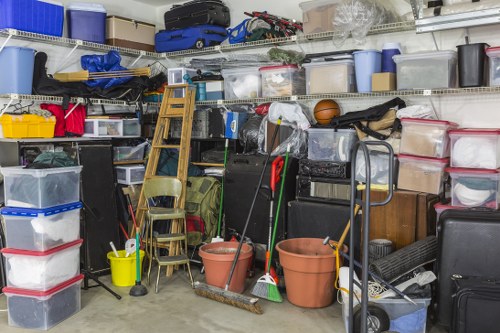
Lofts and garages often contain the items that have been stored away for years rather than used day to day, so they can become some of the most demanding areas in a property. Boxes, broken furniture, seasonal belongings, old equipment and miscellaneous household goods can all end up in these spaces. Our loft and garage clearance work is designed to remove those stored contents in a controlled way, making the area more usable and much easier to inspect.
These jobs often need extra time for sorting because lofts and garages tend to hold mixed items that have been stacked without a clear system. In a loft, access may involve ladders, insulation or low head height; in a garage, the challenge may be reaching items stored behind larger objects. Loft clearance is useful when the space contains a wide mix of boxes and furniture, while garage jobs can be approached in the same practical way with attention to access and weight.
It is worth deciding in advance whether the space should be completely emptied or just stripped back to selected items. Some people want to remove everything, while others only want the obvious waste and the larger unwanted objects gone. Either option can be arranged, but a clear plan avoids repeated handling and keeps the work focused. That is especially helpful when a storage area has not been sorted for some time.
Garden and outdoor contents
House clearance work is not limited to the rooms inside the property. Outdoor areas often accumulate broken tools, plant pots, furniture, timber offcuts, old fencing pieces and general garden debris that no longer has a use. Garden clearance can take those contents away in one organised visit, helping to restore order to patios, sheds, paths and borders. The result is a cleaner outside area and less waste lingering around the home.
Outdoor items are often awkward for different reasons from indoor contents. Some are damp, muddy or weathered; others are bulky but lightweight, which means they take up room without being easy to stack neatly. Garden clearance can be helpful where a shed needs emptying, a seating area is cluttered or a previous DIY project has left materials scattered outside. The approach is still practical and careful, but the sorting needs can be different from those inside the house.
As with any clearance, it helps to separate what is staying from what is going. If a garden contains tools, furniture and general rubbish together, identifying the reusable pieces first prevents items being moved twice. Where there is a combination of indoor and outdoor clearance, the job can be planned in stages so the main access routes stay clear throughout the visit and the property is left in a tidier state.
Household waste, disposal and sorting

Not every job is a straightforward furniture move; many clearances also involve general household waste and mixed items that need sorting before disposal. That can include broken storage, damaged decor, obsolete appliances, packaging, bags of miscellaneous contents and other clutter that has accumulated over time. The aim is to separate reusable or clearly identifiable items from material that needs to be removed, then load it in a way that keeps the process controlled.
For customers, one of the main decisions is whether the clearance should stay tightly focused on specific rooms or extend across the whole property. A focused waste-removal job is often right for targeted clutter, while a fuller clearance suits properties with several different types of contents. Waste removal can be used alongside the house clearance itself when the property contains a blend of general refuse and larger household pieces that need to go together.
Useful preparation is usually simple: keep access routes open, set aside anything that must remain, and make sure the items to be removed are easy to identify. If a room contains a mix of keep, remove and maybe piles, a short walkthrough or written note can save time later. That does not mean everything must be sorted in advance, but it does help the clearance proceed in a cleaner and more predictable sequence.
Pricing factors and quotation details
The cost of a house clearance is usually shaped by the amount of material to be removed, the type of items involved, the ease of access and how much sorting is needed before loading. A property with compact, easy-to-reach contents will usually be simpler to organise than one with bulky furniture, difficult stairs or a loft full of mixed items. Knowing the layout and the general volume of goods helps create a more realistic quotation request from the outset.
For a clear estimate, it is useful to explain whether the job is a single room, several rooms or a complete property, and whether there are any special items such as large cabinets, office furniture or heavy storage pieces. If you have photographs, they can help show the scale of the clearance, but a short written description can also be enough to start. Pricing and quotes is the natural next step when you want to understand how the job may be priced before making a decision.
There is no need to overcomplicate the enquiry. A brief outline of the rooms, the main item types and any access restrictions is often enough to begin. If the property is empty, partially cleared or still in use, mention that too because it changes how the work needs to be organised. A well-structured quotation request saves time on both sides and leads to a more useful response.
Office, business and mixed-use clearances
Although the main focus here is house clearance, some customers also need help with office or mixed-use premises where domestic and business items overlap. This can happen when a home office needs clearing, when storage space has been used for paperwork and desks, or when a property contains a combination of household furniture and work-related contents. In those cases, the job still benefits from the same organised approach: identify what stays, remove the rest and keep the process manageable.
Office-related clearances often include desks, chairs, filing units, shelving and mixed small items that no longer need to stay on site. The practical task is to remove those contents without disturbing anything that remains useful to the business or household. Office clearance is relevant where work equipment or filing has built up alongside domestic contents, while broader removals can cover the rest of the property in the same visit if that suits the plan.
If the property contains both personal and work-related items, separating them before the visit can prevent confusion. Documents, electronics and storage items may need closer attention than standard furniture, so it is worth noting them early in the process. A tidy list of what belongs to which area helps the clearance proceed in a way that is both efficient and respectful of the items being handled.
Recycling, disposal and handling different materials
House clearance is not only about removing items; it also involves handling different material types in a sensible way. Some contents are straightforward furniture pieces, while others may be mixed materials, metal-framed items, soft furnishings, packaging or broken household goods. The aim is to process the clearance carefully so reusable items are separated where appropriate and the rest is dealt with through suitable disposal routes. That keeps the service practical and avoids unnecessary waste.
For many homeowners, this part of the job is one of the least visible but most important. A room can look empty at the end, yet there is a structured process behind that result. Recycling and sustainability is relevant where the customer wants a better understanding of how cleared items are handled after collection. The approach is still grounded in the same main service: clearing the property efficiently while keeping material handling orderly.
When planning a quotation, it can help to mention any particularly mixed loads, such as furniture combined with boxes, soft furnishings or stored household goods. That gives a clearer picture of what the work involves. It is also useful to flag whether any items need careful removal because of size, weight or the way they are stored. The more accurately the contents are described, the easier it is to match the clearance to the property.
About Marlow
Marlow is a town on the River Thames in Buckinghamshire, positioned where the river bends between the Chiltern Hills and the low-lying valley landscape. The settlement developed around the river crossing and trading route, and its history is still visible in the way the town centre combines older streets with later commercial and residential growth. Marlow Bridge, a suspension bridge completed in the 19th century, is one of the town’s best-known structures and forms a striking link across the Thames between Marlow and Bisham. The riverside setting remains central to the town’s character, with the Thames Path passing through the area and giving walkers long views along the water. Higginson Park sits beside the river and provides open green space close to the centre, while All Saints’ Church stands as an important landmark with a prominent tower in the town skyline. Marlow’s streets include a mixture of period buildings, independent shops and civic spaces, and the town has retained a strong sense of place despite modern development. Cultural life is shaped by the river, the park, local schools, sports and community events, all of which contribute to a town that feels both historic and active. The combination of waterside scenery, heritage buildings and accessible open space makes Marlow distinctive within the Thames corridor.
How to prepare a quotation request
A clear quotation request should focus on the practical facts of the job rather than a long explanation of why the clearance is needed. The most useful details are the type of property, the rooms involved, the general volume of items and any difficulties with access such as stairs, narrow hallways or loft ladders. If there are especially large or awkward pieces, naming them early helps the work to be planned properly.
It is also useful to explain the condition of the property. For example, a partly cleared house, an occupied home, an empty property or a room full of stored contents each creates a different pattern of work. If you can provide photographs, they may help with assessment, but they are not the only way to begin. The aim is to make it simple for us to understand what needs removing and what should remain.
Request a quotation when you are ready to move forward, and keep the description concise but specific. That usually produces the most practical response. If you are still deciding which parts of the property need attention, a short note about the main rooms is enough to start the conversation and shape the next step.
Why an organised clearance process helps

An organised house clearance is easier to manage because it reduces repetition, limits confusion and keeps the property usable while the work is underway. When items are identified clearly and the order of removal is sensible, the job can progress in a more controlled way. That matters in homes where there are a few different types of contents to handle, or where some rooms are being kept in use during the clearance.
Useful planning usually comes down to three things: what is staying, what is going and what needs special handling. If you make those distinctions early, the clearance can focus on the right areas without disrupting the rest of the home. Flat clearance may be relevant where the property is a smaller dwelling or apartment, while a broader house job can be arranged when several rooms need attention at once.
If you want to move ahead, send a short description of the property and the items involved. We can then discuss the most suitable approach and provide a quotation based on the scale of the work. A plain, direct enquiry is usually enough to get the process started, and it keeps the next step simple.