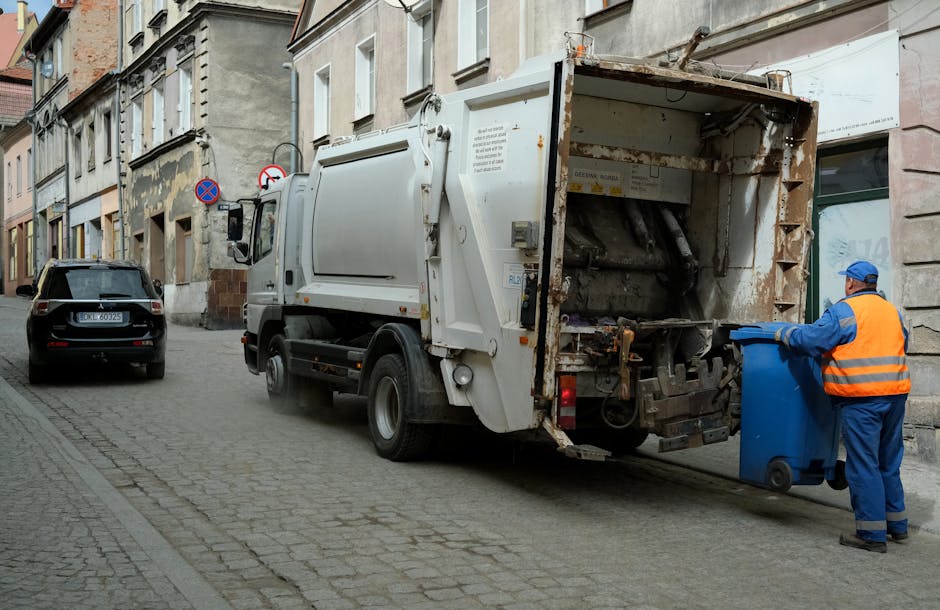
Court Garden bulky rubbish clearance services in SL7
If you live or work in Court Garden and bulky waste is starting to pile up, you probably want the same thing most people want: a fast, tidy, no-drama way to get it gone. Court Garden bulky rubbish clearance services in SL7 are designed for exactly that. Whether it is an old sofa that has been sitting in the hallway for too long, a broken wardrobe, garden waste after a clear-out, or a few mixed items that would take ages to shift yourself, a proper clearance service can save time, effort and a fair bit of stress.
To be fair, bulky rubbish is one of those jobs that looks simple until you are halfway through it. Suddenly you are dealing with awkward lifting, narrow doorways, parking, sorting what can be reused, and wondering what on earth to do with the rest. This guide explains how the service works, what to expect, how to choose the right approach, and how to avoid the common pitfalls that make a straightforward clearance feel much harder than it should be.
For readers who want to learn more about the business behind the service, you can also review the company's about us page, or if you are already at the stage of comparing options, the pricing and quotes information may be useful.
Table of Contents
- Why Court Garden bulky rubbish clearance services in SL7 Matters
- How Court Garden bulky rubbish clearance services in SL7 Works
- Key Benefits and Practical Advantages
- Who This Is For and When It Makes Sense
- Step-by-Step Guidance
- Expert Tips for Better Results
- Common Mistakes to Avoid
- Tools, Resources and Recommendations
- Law, Compliance, Standards, or Best Practice
- Options, Methods, or Comparison Table
- Case Study or Real-World Example
- Practical Checklist
- Conclusion
- Frequently Asked Questions
Why Court Garden bulky rubbish clearance services in SL7 Matters
Bulky rubbish is not just "stuff in the way". It affects how a home feels, how safely people can move through it, and how quickly a property can be used properly again. In Court Garden, where properties can have limited access, shared parking considerations, or tight spaces around doors and stairwells, moving large items out yourself is often harder than people expect.
The practical side matters most. A sofa, mattress, bed frame, broken white goods, old desks, or heavy cabinets can take up a surprising amount of room. Left long enough, they become part of the furniture in the worst possible way. And once one large item stays, a second tends to join it. Then a third. You know how it goes.
There is also a health and safety angle. Dragging heavy objects downstairs, lifting awkward loads, or trying to fit them into a car or small van can lead to damage and injury. A good bulky rubbish clearance service is meant to reduce that risk, not add to it. That is especially useful for busy households, landlords, letting agents, and businesses that need a quick turnaround without turning the place upside down.
For people who care about where items end up, there is another reason it matters: responsible handling. Not everything should be treated as waste. Some bulky items can be reused, separated for recycling, or handled more carefully depending on condition and material. If environmental handling is important to you, it is worth checking a provider's recycling and sustainability approach before you book.
Expert summary: The best bulky rubbish clearance is rarely the quickest-looking option on paper. It is the one that removes the items safely, leaves the space tidy, and handles reuse or recycling sensibly. Simple, really - but it saves headaches.
How Court Garden bulky rubbish clearance services in SL7 Works
Most clearance jobs follow a straightforward process, although the details can vary depending on the amount of waste, the access arrangements, and whether the items are mixed or straightforward. In plain English, here is how it usually works.
1. You describe the items
Start by listing what needs removing. Be specific if you can. "A sofa and a few bags" is useful, but "a three-seater sofa, one armchair, two bedside tables, and six black bags" is much better. Photographs often help as well, especially where larger items are involved. The clearer the picture, the better the planning.
2. The job is assessed
A reputable service will usually consider volume, access, weight, timing and any special handling needs. For example, a bulky mattress from a ground-floor flat is a different job from a heavy wardrobe that needs careful removal from upstairs. One sounds easy. The other, not so much.
3. A price or estimate is given
Many people focus only on the headline figure, but the details matter. Does the quote include labour, loading, transport and disposal? Are there extra charges for difficult access, mixed waste, or specialist items? It is worth asking before the day arrives. If you are comparing options, the company's pricing and quotes page is the right place to start.
4. Collection is scheduled
Most jobs are arranged to suit the property owner, tenant, landlord, or managing agent. For many Court Garden customers, the ability to work around work schedules or move-out deadlines is the real value. A two-hour window can be much easier than spending half a day waiting around.
5. Items are removed and sorted
On the day, the team should remove the bulky items carefully, protecting floors and walls where needed. Good practice means checking for reuse, separating recyclable material where possible, and clearing the area properly afterwards. A rushed job may move quickly, but it rarely leaves a good impression.
6. The space is left tidy
This part gets overlooked, but it matters. Once the clutter is gone, the room should feel usable again. That final sweep, the little bits on the floor, the corners that need checking - those are the details people notice when they walk back in.
Key Benefits and Practical Advantages
The obvious benefit is convenience. Still, there is a bit more to it than that.
- Less physical strain: No hauling heavy or awkward items down stairs or through tight hallways.
- Faster turnaround: The work can be completed far quicker than a DIY clearance, especially for larger loads.
- Cleaner finish: A proper clearance service should leave the space ready for its next use.
- Better handling of mixed items: Furniture, household junk, broken fittings and garden waste can often be dealt with together.
- Reduced disruption: Useful for families, landlords, tenants, offices and tradespeople who need the area back fast.
- More responsible disposal: Reuse and recycling can be built into the process rather than left to chance.
There is also a less obvious advantage: peace of mind. When large unwanted items are removed properly, the whole property feels easier to manage. The room looks bigger. The path is clearer. The mental clutter lifts a bit too, which sounds fluffy until you have lived with a spare room full of broken furniture for six months.
For business customers, the benefit can be even more practical. A cleared office, shop backroom, or storage area means better use of space and less risk of work being slowed down by obstacles. That is one reason many people choose a specialist rather than trying to DIY the job over several weekends.
Who This Is For and When It Makes Sense
Court Garden bulky rubbish clearance services in SL7 are useful for a wide range of people, but they make the most sense in a few common situations.
- Homeowners: Ideal after replacing furniture, redecorating, or clearing a garage, loft or spare room.
- Tenants: Helpful when moving out and there are old items that will not fit in the car or are too large for normal bins.
- Landlords and letting agents: Useful after a tenancy ends and the property needs a fast reset.
- Families downsizing: Often needed when some furniture stays, but the rest has to go quickly and carefully.
- Local businesses: Handy for office furniture, storage unit clearances, stock-room clutter or old display pieces.
- Trades and renovators: Practical for removing awkward waste at the end of a refurbishment or fitting job.
It also makes sense whenever the items are too bulky for normal council collection methods, too heavy for one person to move safely, or too awkward to break down neatly. Sometimes the need is obvious. Other times you only realise it when your hallway is blocked by a mattress and a broken table and everyone is stepping around it sideways.
A service like this is less about "decluttering" in the lifestyle-magazine sense and more about getting on with real life. If the items are causing inconvenience, delay, or safety concerns, that is usually the moment to act.
Step-by-Step Guidance
If you want the process to go smoothly, it helps to treat it like a small project rather than a random favour. Here is a sensible way to approach it.
- List everything that needs removing. Separate bulky items from smaller rubbish where possible.
- Check access. Think about stairs, parking, doorway widths, lifts, and whether items need dismantling.
- Take clear photos. A few photos from different angles can prevent misunderstandings later.
- Ask what is included. Labour, loading, disposal and any clean-up should be made clear.
- Confirm timing. Morning or afternoon, weekdays or weekends, and whether there is a tight deadline.
- Separate anything you want to keep. This sounds obvious, but people do occasionally put the wrong thing in the pile. A lamp you meant to keep, for example. Slightly tragic.
- Prepare the route. Move smaller items out of the way, open gates if needed, and make sure parking or access is arranged.
- Walk through the job on arrival. Point out any awkward pieces, delicate flooring, or items needing extra care.
- Check the cleared area afterwards. Make sure the main items have gone and the space is as expected.
If you are trying to organise a larger or more urgent job, it may be useful to contact the team directly through the contact us page. That way you can explain the situation clearly rather than trying to squeeze too much into a short form.
Expert Tips for Better Results
Small details make a big difference with bulky waste. In our experience, the jobs that go best are usually the ones that were prepared with a little thought up front.
- Be honest about the volume. Understating the amount of waste almost always leads to awkwardness later.
- Group similar items together. Furniture in one place, loose rubbish in another, and anything fragile clearly separated.
- Flag special items early. Items with glass, sharp edges, or built-in electrical parts may need extra handling.
- Plan for access, not just removal. The route out matters as much as the items themselves.
- Ask about recycling and reuse. Not everything needs to become landfill waste.
- Choose the right time of day. If neighbours, parking or building access are factors, a quieter slot can make life easier.
One useful habit is to stand in the space and imagine the items being lifted out one by one. Sounds silly, maybe. But it helps you spot bottlenecks fast. You will notice the door that opens the wrong way, the plant pot in the corner, the table that will not swivel past the radiator. Those little obstacles are where jobs slow down.
Another tip: if you are clearing a room for sale, rental, or refurbishment, take a couple of photos before and after. Not for social media. Just for your own records and sanity. Sometimes a room looks clear until the day the decorators arrive and ask where the leftover chest of drawers vanished to.
Common Mistakes to Avoid
A lot of bulky clearance problems come from simple assumptions. Here are the mistakes that tend to cause the most hassle.
- Leaving everything until the last minute. Rushed clearances are stressful and usually cost more in time.
- Not checking access properly. A van may be available, but if parking or entry is awkward, the job still slows down.
- Mixing keep and remove items together. This is one of the most common and avoidable issues.
- Assuming all bulky items are treated the same. Some items need special handling or sorting.
- Forgetting about stairs and weight. A large item can be manageable in the room but difficult on the way out.
- Choosing solely on price. The cheapest option is not always the best value if it cuts corners on service or care.
Another one, and this happens more often than people admit: assuming "someone will sort it out" and then finding a key item still sitting in the corner after the clearance. A quick walk-through at the end avoids that awkward moment.
There is no shame in asking basic questions either. What happens if the load is bigger than expected? Are there restrictions on what can be collected? How are recyclable items handled? These are sensible questions, not picky ones.
Tools, Resources and Recommendations
You do not need much to prepare for a bulky rubbish clearance, but the right few tools can make the job easier and safer.
- Measuring tape: Useful if a sofa, bed frame or wardrobe needs to pass through a tight doorway or stairwell.
- Dust sheets or old blankets: Helpful for protecting floors and walls during removal.
- Marker tape or labels: A simple way to identify what is being removed and what is staying.
- Phone camera: Photos help with quotes, planning and avoiding confusion.
- Gloves and sturdy shoes: If you are moving anything yourself, basic protection matters.
- Boxes or bags for small loose items: Keeps screws, cables and extras from disappearing into the general mess.
For customers who want clarity about transactions and service terms, the pages on payment and security and terms and conditions are worth reading before you book. They help set expectations properly, which is never a bad thing.
If you are a particularly organised person, you might even make a simple list of "remove", "keep", and "unsure". The third pile usually becomes the most expensive one emotionally, strangely enough.
Law, Compliance, Standards, or Best Practice
Bulky rubbish clearance is not just about lifting and loading. There are also legal and best-practice expectations that reputable services should follow. The exact details can vary depending on the waste type and the circumstances, so careful handling matters.
In the UK, waste should be managed responsibly and transported appropriately. A trustworthy clearance provider should be able to explain how waste is handled, where items are taken, and how recycling is considered where suitable. It is reasonable for customers to expect sensible procedures around sorting, loading, and disposal.
Health and safety is equally important. Heavy lifting, sharp edges, glass, uneven ground and cramped access can all create risk. That is why clear working methods, proper equipment and sensible behaviour on site are worth paying attention to. If you want to understand the company's approach in more detail, the health and safety policy and insurance and safety information are good trust signals to review.
It also helps to use a provider with a clear complaints process and accessible customer information. If anything ever goes wrong, you want to know what happens next and how concerns are handled. For transparency, you can review the complaints procedure and the accessibility statement if needed.
Best practice, in short, means the job is done safely, waste is handled properly, and the customer is not left guessing. That should be the baseline, not a luxury.
Options, Methods, or Comparison Table
There are a few ways people deal with bulky waste in Court Garden. Some are fine for very small jobs. Others make more sense for bigger, heavier, or time-sensitive clearances. Here is a useful comparison.
| Method | Best for | Pros | Limitations |
|---|---|---|---|
| DIY removal | One or two light items | Can be low cost if you already have transport and help | Heavy lifting, access problems, time-consuming, potential injury risk |
| Borrowed van and helper | Small to medium loads | Flexible, often quicker than multiple car trips | Still requires lifting, loading, and disposal planning |
| Bulky rubbish clearance service | Mixed or awkward items, urgent jobs, larger loads | Convenient, safer, usually faster, less disruption | Needs a clear quote and proper access planning |
| Multiple trips to a facility | Very small volumes over time | Can work for people with lots of spare time | Labour-intensive and inconvenient; not ideal for bulky furniture |
For most people with proper bulky items, the service option is the sensible middle ground. It is less effort than DIY, and usually a lot less chaotic too. Not always the cheapest on paper, but often better value once time and effort are considered.
Case Study or Real-World Example
Here is a realistic example. A family in Court Garden is preparing a spare room for a new use. Over the years, it has become the kind of room everyone apologises for: an old wardrobe, a broken bed base, a two-seater sofa that was meant for "temporary storage", and a few bags of mixed household items. Nothing dramatic. Just a room that has quietly become unusable.
They start by separating what they want to keep, then they take photos and list the items. One thing they notice straight away is access. The stairwell is narrow, and the wardrobe will need careful manoeuvring. They also realise the sofa is heavier than expected because of the frame inside. That sort of detail matters.
On the day, the clear-up is quick because the job was described properly in advance. The team removes the bulky items, the room is checked at the end, and the family can move on to redecorating without waiting another week. No drama. No pile of leftovers in the corner. Just a usable room again, which, honestly, is what most people are really paying for.
A small office scenario works in a similar way. A business may need old filing cabinets, desks, and broken chairs removed before a new layout is installed. The benefits are not just visual. The staff get their space back, the job does not interrupt trading for long, and the office feels lighter the moment the clutter is gone. You can hear the echo in the room sometimes. That quiet, empty kind of echo. Nice, actually.
Practical Checklist
Use this quick checklist before booking Court Garden bulky rubbish clearance services in SL7:
- List every item that needs removing.
- Separate items you want to keep.
- Take clear photos from more than one angle.
- Check doorway, stair, lift, and parking access.
- Note any heavy, fragile, or awkward items.
- Ask what is included in the quote.
- Confirm timing and any access restrictions.
- Prepare the route from the item to the exit.
- Review payment, security and terms before booking.
- Ask how recyclable items are handled.
- Do a final walk-through after collection.
If you want a smoother booking process, it also helps to read the company's recycling and sustainability information alongside the quote details, especially if environmental handling matters to you.
Conclusion
Court Garden bulky rubbish clearance services in SL7 are about more than getting large items out of the way. Done properly, they give you a safer property, a quicker turnaround, and a calmer space to work with. Whether you are clearing a home, dealing with end-of-tenancy waste, or making room for a refurbishment, the same principles apply: plan clearly, choose a reliable service, and make sure the items are handled responsibly.
The best results usually come from a straightforward process: clear information, fair expectations, safe removal, and a tidy finish. Simple idea. Big difference.
If you are ready to take the next step, use the company information pages to learn more, check the details that matter to you, and make sure the service matches your situation. A little preparation now saves a lot of mess later, and that is one of those small practical wins that genuinely feels good.
Get a free quote today and see how much you can save.
And if you are comparing providers, it never hurts to look at the contact options and the support pages before making your choice. A trustworthy service should feel clear, calm and easy to work with from the start.
Frequently Asked Questions
What does bulky rubbish clearance usually include?
It normally includes the removal of large unwanted items such as sofas, beds, wardrobes, tables, chairs, mattresses, appliances and other hard-to-move waste. The exact scope should always be confirmed before booking, especially if your load includes mixed materials or awkward access.
Is bulky rubbish clearance in Court Garden suitable for one item only?
Yes, it can be. A single large item can still be worth collecting if it is too heavy, awkward, or time-consuming for you to move yourself. One sofa or one mattress can be enough to justify a visit, particularly if stairs or parking make DIY removal a pain.
How do I prepare for a bulky waste collection?
Make a list of the items, take photos, clear a route to the exit, and separate anything you want to keep. It also helps to check parking and access in advance. A few minutes of preparation usually saves a lot of back-and-forth later.
Can bulky rubbish be recycled or reused?
Sometimes, yes. It depends on the condition and material of the item. Good providers aim to separate reusable or recyclable items where practical. If that matters to you, ask how the service handles sorting and disposal before you book.
What if my items are heavier than expected?
That happens more often than people think. If an item turns out to be heavier or more awkward than expected, let the provider know as early as possible. Clear photos and honest descriptions are the best way to avoid surprises on the day.
Do I need to dismantle furniture first?
Not always. Some items can be removed as they are, while others are easier to move if partially dismantled. If you are unsure, ask first. In many cases, the service can advise whether dismantling will save time or is even necessary at all.
How long does a bulky rubbish clearance take?
It depends on the size of the load, access, and how easy the items are to remove. A small collection can be fairly quick, while a larger or more complex clearance may take longer. The key thing is that a proper quote should reflect the real job rather than guesswork.
Is this a good option for landlords or letting agents?
Yes, very often. When a tenancy ends and there are leftover items to remove, a structured clearance service can help prepare the property for cleaning, decorating, or reletting much faster than waiting to do it in stages.
What should I ask before agreeing to a quote?
Ask what is included, whether labour and disposal are covered, what happens if access is difficult, and how recyclable items are handled. You may also want to check payment details and terms so there are no awkward surprises later.
Is bulky rubbish clearance safe for people with limited mobility or older residents?
It can be a very sensible option because it reduces the need for lifting and moving heavy items. If the property has special access requirements or sensitive areas, make sure those are mentioned clearly when arranging the job.
What happens if I have mixed rubbish, not just furniture?
Mixed waste is common. The important part is to describe it accurately so the provider can plan properly. Mixed loads may need sorting, and different materials can affect handling and disposal. A clear description usually leads to a smoother collection.
How do I know if the service is reliable?
Look for clear communication, transparent pricing, sensible policies, and a professional approach to safety and disposal. Pages such as the about us, health and safety policy, and insurance and safety information can help you judge whether the provider is well organised and trustworthy.
Can I book a clearance if I need the items gone quickly?
Often, yes, although availability depends on workload and the size of the job. If timing is tight, contact the provider as early as possible and explain the deadline clearly. Urgent jobs are much easier to manage when the details are shared up front.